For years, AI discussions have been dominated by GPUs, large language models, and semiconductor innovation. While these technologies deserve the spotlight, there is another critical piece of infrastructure quietly enabling the AI revolution:

The optical network.
As AI models scale from billions to trillions of parameters, the challenge is no longer just compute power. It is the ability to move enormous volumes of data between GPUs, data centers, and geographic regions with minimal latency and maximum efficiency.
In many ways, the future of AI will be determined not only by how fast we can compute—but by how fast we can communicate.
From long-haul coherent optical transport networks to hyperscale data center interconnects, next-generation optical networking is becoming one of the most strategic technologies of the AI era.
Here are five reasons why.
1. AI Is Creating Unprecedented Bandwidth Demand
Traditional enterprise applications generate predictable traffic patterns.
AI workloads do not.
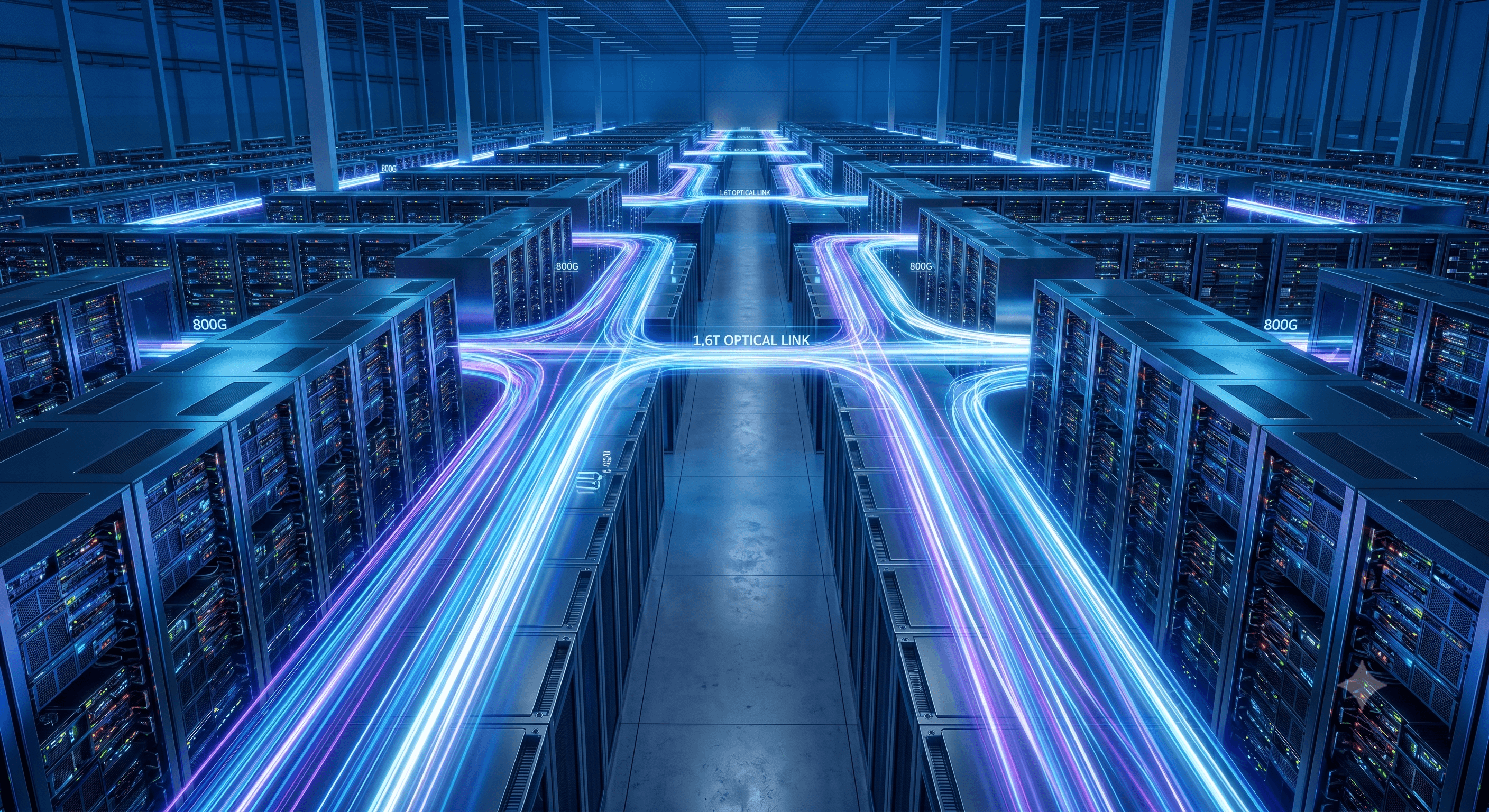
Training modern AI models requires thousands—or even hundreds of thousands—of GPUs exchanging data continuously across high-speed fabrics.
The industry has rapidly evolved from:
100G optical networks
400G transport systems
800G optical interconnects
And is now moving toward:
1.6 Tbps coherent optics
3.2 Tbps optical engines
Co-Packaged Optics (CPO)
Recent industry demonstrations have shown commercial deployments of 1.6 Tbps coherent technology and active development toward 3.2 Tbps optical interconnects, driven primarily by hyperscale AI infrastructure requirements. (Ciena)
Without optical networking innovation, GPU clusters would spend more time waiting for data than processing it.
In the AI era, bandwidth has become a strategic resource.
2. Long-Haul Optical Networks Enable Global AI Infrastructure
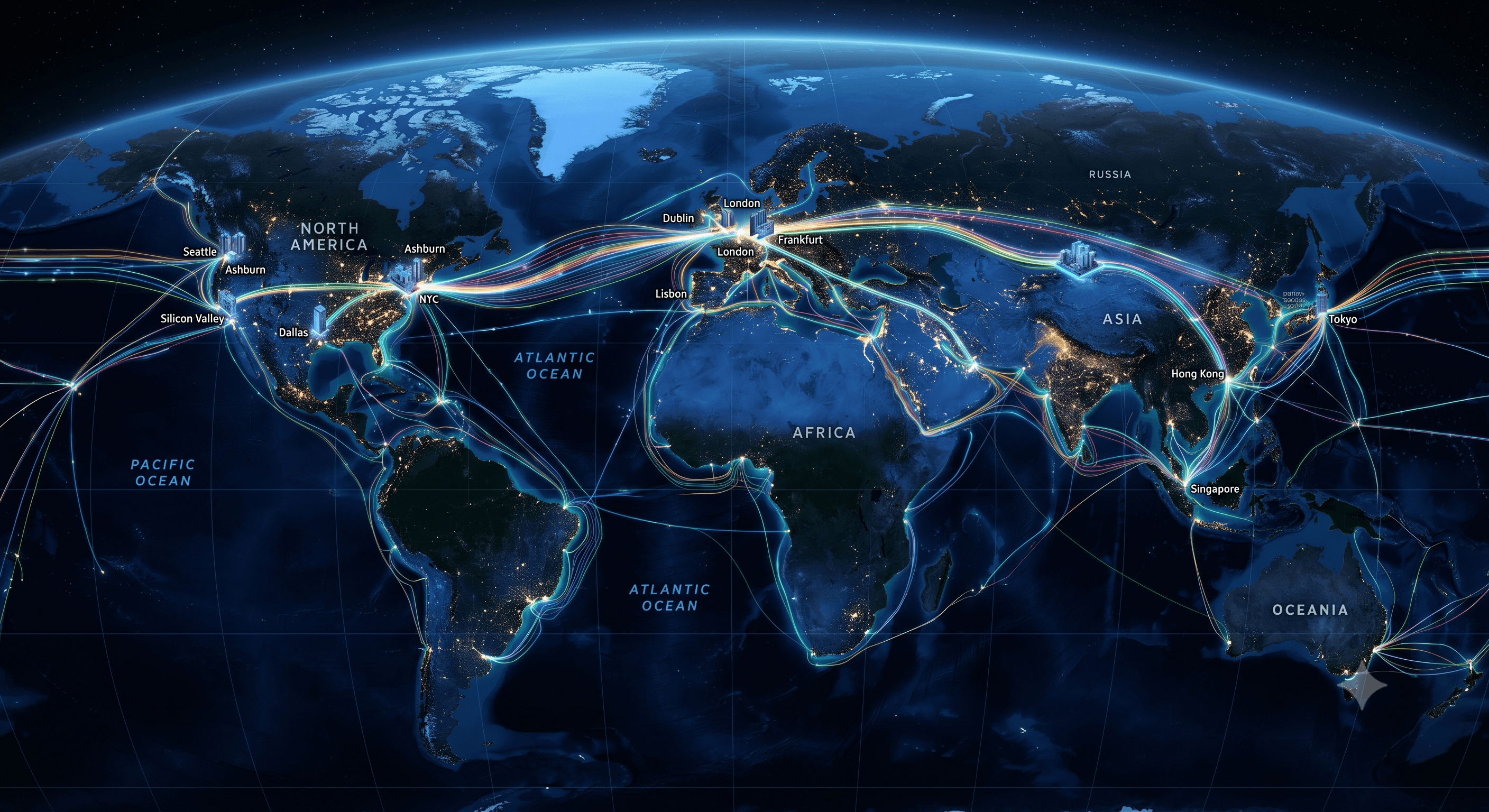
AI is no longer confined to a single data center.
Modern AI ecosystems span:
Multiple regions
Multiple availability zones
Multiple cloud providers
This creates significant demand for long-haul and metro optical transport networks.
Technologies such as:
DWDM (Dense Wavelength Division Multiplexing)
Coherent Optical Transmission
Flex-Grid Optical Networks
CDC-F ROADMs (Colorless, Directionless, Contentionless Reconfigurable Optical Add-Drop Multiplexers)
allow operators to maximize fiber utilization while transporting massive volumes of AI-generated data across continents.
As enterprises increasingly deploy distributed AI architectures, coherent optical transport becomes essential for Data Center Interconnect (DCI) applications, supporting connectivity across metro, regional, and long-haul environments. (IN Electronics & Design)
The future AI ecosystem will not consist of isolated data centers.
It will consist of globally interconnected AI fabrics.
3. Optical Networking Is Solving the Data Center Bottleneck
Historically, compute scaling was the primary challenge.
Today, interconnect scaling has become equally important.
Many AI workloads require continuous communication between GPUs for:
Model training
Gradient synchronization
Distributed inference
Memory sharing
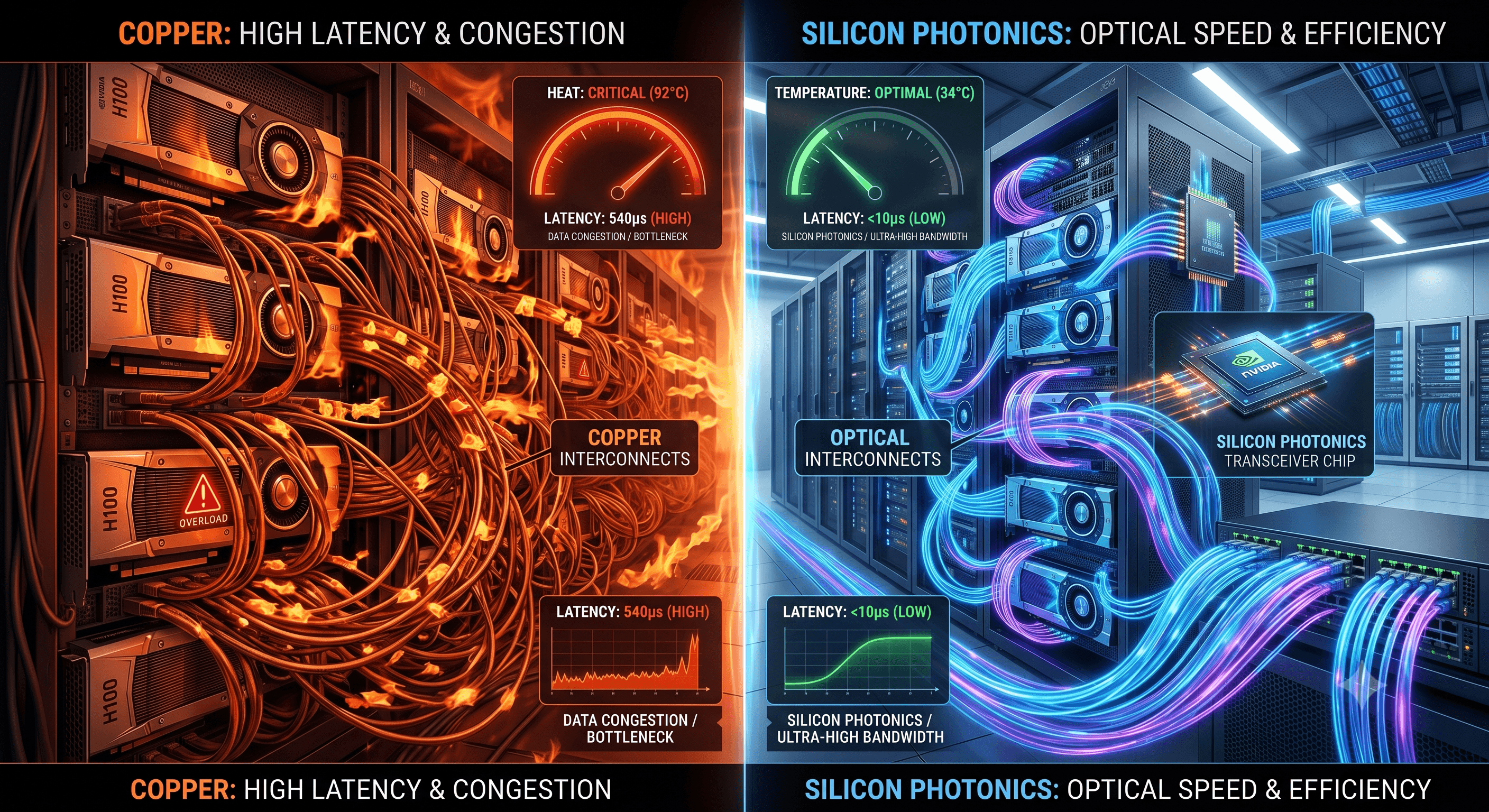
Copper-based interconnects are increasingly constrained by:
Signal attenuation
Thermal limitations
Power consumption
Distance restrictions
As a result, hyperscalers are accelerating investments in:
Silicon Photonics
Linear Pluggable Optics (LPO)
Active Optical Cables (AOC)
Co-Packaged Optics (CPO)
Industry leaders now view optical connectivity as a fundamental layer of AI infrastructure rather than a supporting component. Optical interconnects are rapidly evolving from 800G deployments toward 1.6T architectures to meet AI cluster requirements. (World Wide Technology)
The bottleneck has shifted.
The challenge is no longer connecting servers.
The challenge is connecting thousands of GPUs efficiently.
4. AI and Optical Networks Will Become Increasingly Interdependent

The relationship between AI and optical networking is becoming bidirectional.
Today, optical networks support AI.
Tomorrow, AI will help operate optical networks.
Network operators are increasingly exploring AI-driven approaches for:
Predictive fault detection
Optical impairment analysis
Dynamic wavelength optimization
Traffic engineering
Capacity forecasting
Automated root-cause analysis
Imagine a future DWDM network capable of predicting fiber degradation before customer impact occurs.
Imagine AI dynamically optimizing wavelength allocation based on traffic demand.
Imagine optical transport networks that continuously self-tune coherent transmission parameters.
This convergence of AI and optical networking will create autonomous transport networks capable of delivering higher reliability, lower operational costs, and faster service restoration.
5. Photonics Will Become One of the Most Strategic Technologies of the Decade
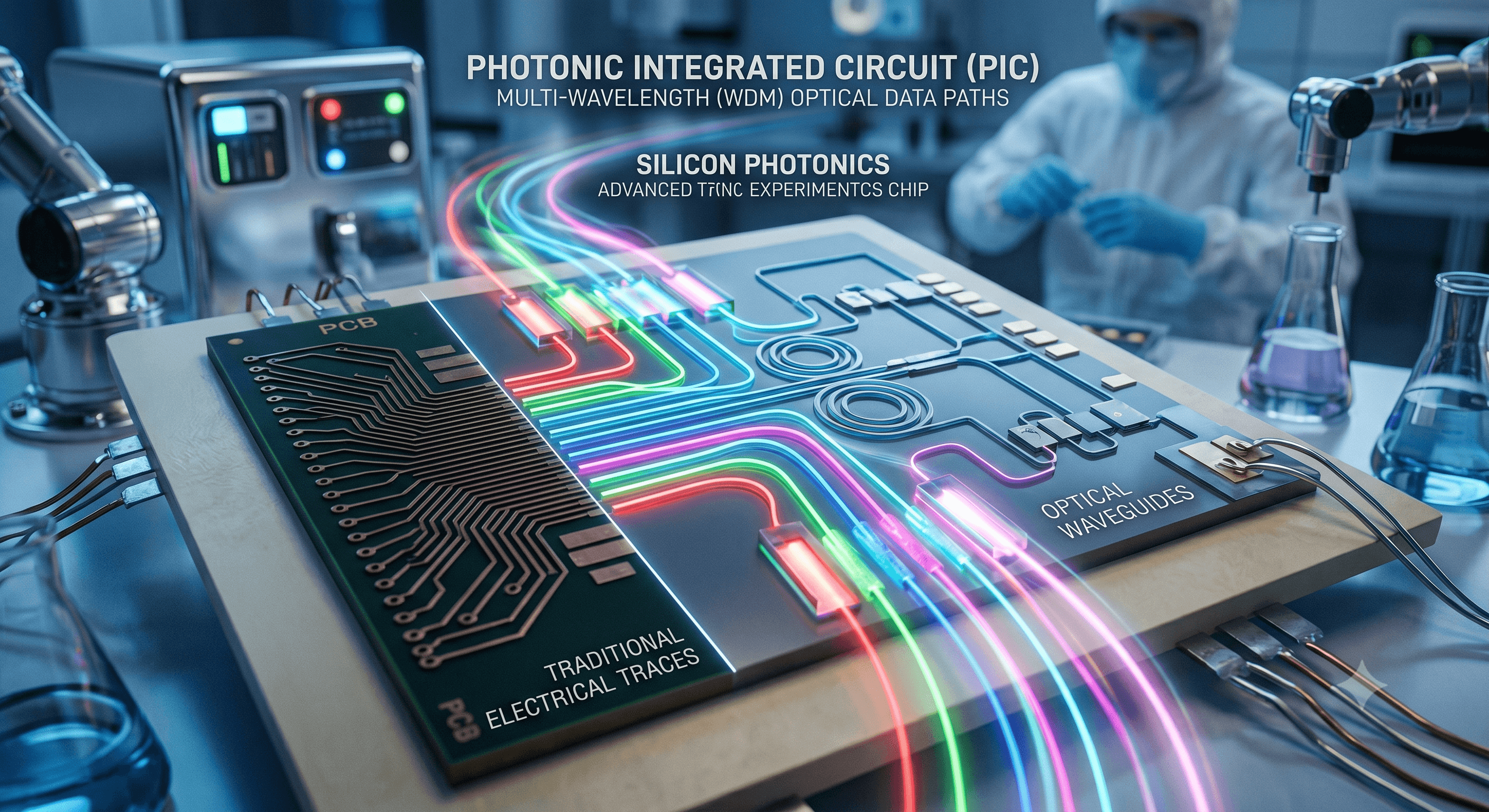
The AI era is accelerating innovation across the photonics ecosystem.
Industry leaders are investing heavily in:
Silicon Photonics
Indium Phosphide (InP) technologies
Coherent DSPs
Photonic Integrated Circuits (PICs)
Optical Circuit Switching (OCS)
Advanced Optical Transceivers
As AI clusters scale to millions of accelerators, optical communication is increasingly replacing traditional electrical approaches due to superior bandwidth density, reach, and power efficiency. Researchers and industry leaders view photonics as a key enabler of next-generation AI systems.
The future AI data center will not merely contain optical networking.
It will be built around it.
Companies Leading the Optical Networking Revolution
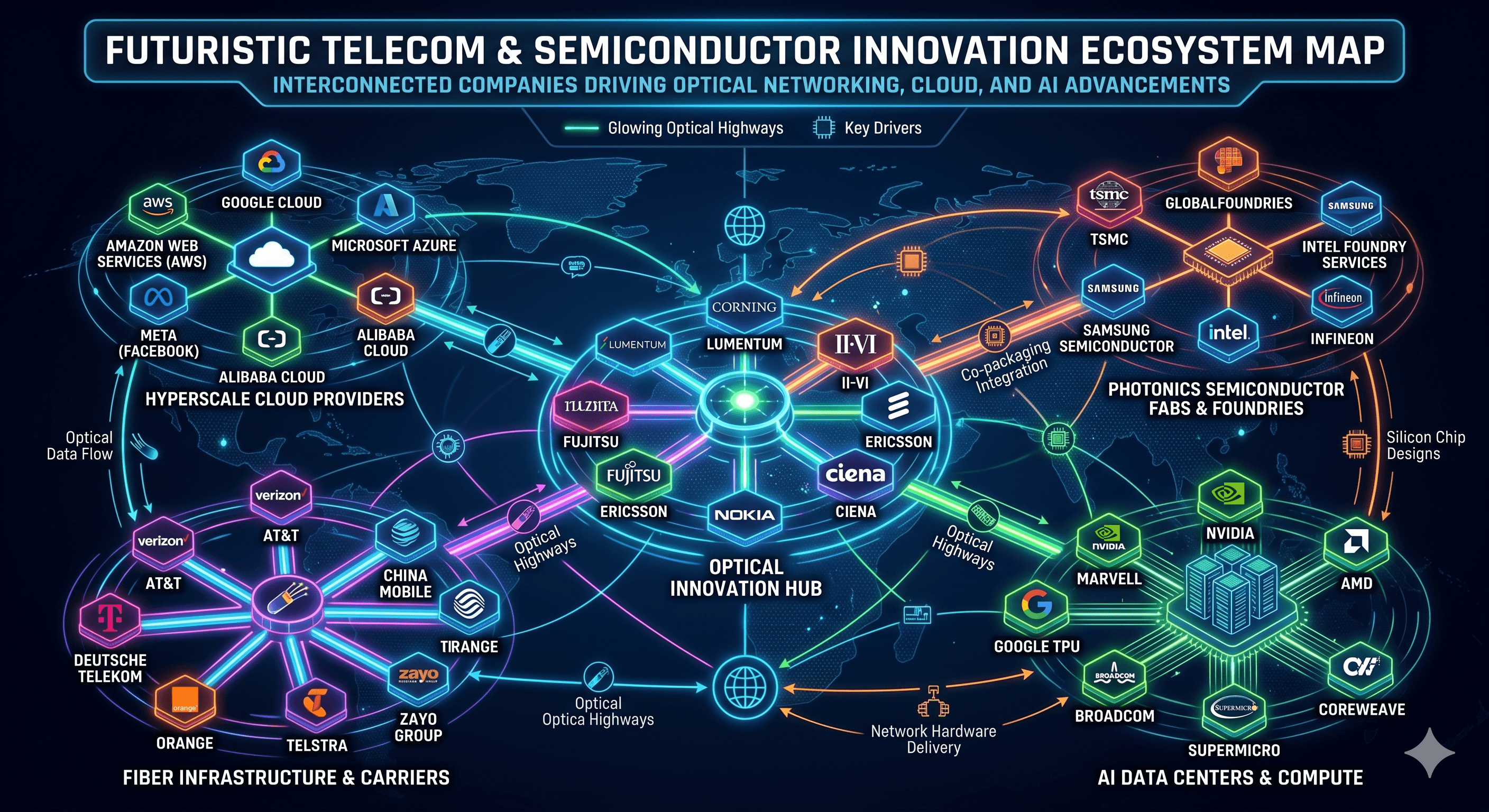
Several companies are driving innovation across the optical networking ecosystem:
Ciena – Coherent optics, WaveLogic technology, 1.6T transport innovation
Nokia – Optical transport, data center interconnect, and photonic innovation following the Infinera acquisition
Cisco – Optical transport and hyperscale networking solutions
Juniper Networks – AI-driven networking and data center fabrics
NVIDIA – Silicon photonics and AI-scale networking architectures
Marvell Technology – 800G and 1.6T coherent optical solutions for AI infrastructure
Lumentum – Advanced optical components and photonics
Coherent Corp. – Silicon photonics, coherent optics, and next-generation transceivers
Applied Optoelectronics – High-speed optical transceivers for AI-driven data centers
Corning Incorporated – Fiber infrastructure and optical communications technologies supporting hyperscale AI growth
Final Thoughts
For nearly two decades, I have worked in telecommunications and transport networking, and one lesson remains consistent:
Every technology revolution eventually becomes a networking challenge.
The AI revolution is no different.
The industry often celebrates breakthroughs in compute, GPUs, and foundation models. Yet behind every AI model training run, every inference request, and every hyperscale cluster lies an optical network moving data at the speed of light.
As AI systems continue to scale, the winners will not simply be those with the most compute power.
They will be those with the most efficient, scalable, and intelligent optical infrastructure.
In the AI era, optical networking is no longer just transport.
It is becoming the nervous system of the digital world.